CONF-MSS 2026

Title:

Advanced Composite Materials and Polymer Chemistry: Flexible Biomedical Electronics

Date:

June 19, 2026 (UTC +3)

Organizer:

Department of Biomedical Engineering, Faculty of Engineering, Çukurova University

Symposium Chair:

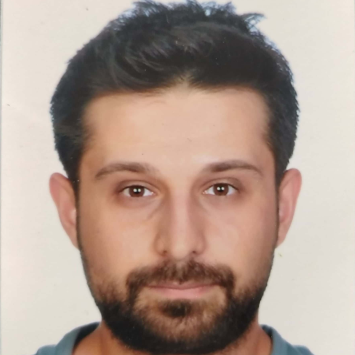
Dr. Mustafa Istanbullu

Assistant Professor in Çukurova University

Personal Bio:

Dr. Mustafa Istanbullu is an assistant professor and vice chair of the undergraduate program in Biomedical Engineering at Çukurova University, where he has been working since 2021. He received his Bachelor's degree in Electrical and Electronics Engineering and later earned a master's degree in Biomedical Engineering from the Istanbul Technical University.

For his master's thesis, he focused on the early diagnosis of osteoporosis using artificial neural networks and support vector machines. He then pursued his PhD at Çukurova University, where his research centered around the design and simulation of a carbon nanotube hybridized field-effect transistor biopotential sensor.

His research interests include microelectronics, microfabrication of semiconductor devices, modeling of electronic devices, analog/digital circuit design, and biomedical instrumentation. He has published articles in international scientific journals and has received an international patent in 2021 for his invention of an ANN-based single calibration impedance measurement system for skin impedance range. He is committed to advancing the field of biomedical engineering and providing his students with an exceptional education.

Committee Members:

Dr. Ömer Burak Istanbullu, Eskişehir Osmangazi University, Turkey, oburak.istanbullu@ogu.edu.tr

Mustafa Borazan, Çukurova University, Turkey, mstfaborazan@gmail.com

Call for Papers

Background:

Flexible electronics have emerged as a transformative technology enabling next-generation biomedical sensors that conform to soft biological tissues. Among flexible substrate materials, polyimide stands out due to its excellent thermal stability, mechanical flexibility, chemical resistance, and compatibility with microfabrication processes. Recent advances in polymer chemistry and composite engineering have enabled the integration of conductive fillers, nanomaterials, and biocompatible coatings into polyimide matrices, resulting in multifunctional composite platforms. These developments support applications ranging from wearable health monitors to implantable biosensors and soft bioelectronic interfaces. The convergence of composite materials science and flexible electronics is opening new pathways for reliable, lightweight, and cost-effective biomedical sensing technologies.

Goal/Rationale:

Despite significant progress, challenges remain in developing flexible biomedical sensors that combine mechanical durability, biocompatibility, electrical stability, and scalable fabrication. Polyimide-based composites offer a promising solution by enabling tunable mechanical and electrical properties through polymer chemistry and material engineering. This symposium aims to explore recent advances in polyimide composites for flexible electronics, focusing on their role in wearable and implantable biomedical sensors.

Key topics include conductive composite formulations, integration of nanomaterials (e.g., graphene, CNTs), microfabrication on flexible substrates, encapsulation strategies, and long-term reliability in physiological environments. The symposium will also address translational challenges such as manufacturability, cost reduction, and regulatory considerations. By bringing together researchers from materials science, polymer chemistry, electronics, and biomedical engineering, the symposium seeks to foster interdisciplinary collaboration and accelerate the development of next-generation flexible bioelectronic systems.

Scope and Information for Participants:

This symposium invites contributions addressing the design, fabrication, characterization, and application of polyimide-based composite materials in flexible biomedical electronics. Topics of interest include:

  • Polyimide composite materials with conductive fillers and nanomaterials
  • Flexible and stretchable biosensor architectures
  • BioMEMS fabrication on polymer substrates
  • Biocompatible coatings and encapsulation methods
  • Wearable and implantable sensor applications
  • Reliability and performance in physiological conditions
  • Low-cost and scalable manufacturing approaches
  • Integration with wireless and portable health monitoring systems

The symposium is intended for researchers, engineers, and industry professionals working in materials science, polymer chemistry, biomedical engineering, and flexible electronics. Participants will gain insights into emerging materials, fabrication strategies, and interdisciplinary approaches shaping the future of biomedical sensing technologies.

Topics:

The main topics of this symposium are listed below.

Materials and Chemistry

  • Advanced Materials and Technologies
  • Chemical Engineering
  • Chemical Reaction Engineering and Catalysis
  • Composite Materials
  • Physical and Organic Chemistry
  • Polymer Chemistry
  • Polymer Science and Engineering

Meanwhile, submissions aligned with the overall conference theme are also welcome.

Mechanics and Automation

  • Machine Design
  • Mechanical CAD/CAM
  • Mechanical Power Engineering
  • Mechanical Dynamics
  • Process Control & Instrumentation
  • Flexible Manufacturing Systems
  • Integrated Manufacturing
  • Precision Manufacturing & Measurement
  • Fault Detection and Diagnostics
  • Physical System Modelling
  • Manufacturing Automation
  • Industrial Automation
  • Micro- and Nano-scale Automation
  • Advanced Intelligent Mechatronics
  • Machine Vision System
  • Human-Machine Interaction
  • Real-time Systems

Robotics

  • Mechatronics and Robotics
  • Bio-inspired Robotics
  • Evolutional Robotics
  • Field Robotics
  • Manufacturing Robotics
  • Healthcare Robotics and Medical Robotics
  • Wearable Exoskeleton and Powered Exoskeleton
  • Parallel Robots and Manipulators
  • Robotic Cognition and Emotion
  • Robotic Perception and Decision
  • Human-Robot Interaction
  • Control Algorithms and Control Systems
  • Kinematics and Dynamics Analysis
  • Mathematical and Computational Methodologies in Robotics

Electronics and Sensors

  • Sensors / Actuators
  • Sensor Design, Sensor Fusion, Sensor Networks
  • Sensing and Measurement in Electromechanical Systems
  • Intelligent Sensing and Control
  • Micro-nano Electromechanical System
  • Micro and Nano Mechatronics
  • Mechatronics in MEMS
  • Microfluidic Technology

Smart System

  • Smart Grids, Smart Power Delivery Systems
  • Power Engineering
  • Distributed Generation Systems
  • High Voltage Systems
  • Power Quality (PQ)
  • Power System Reliability
  • Transportation and Traffic Engineering
  • Power Electronics and Drives
  • Electric Motors and Transformers
  • Grid to Vehicle (G2V) and Vehicle to Grid (V2G)
  • Electric Vehicles
  • Autonomous Driving
  • Smart Transportation and Smart City
  • Civil Engineering

Submission:

Prospective authors are kindly invited to submit full papers that include title, abstract, introduction, tables, figures, conclusion and references. It is unnecessary to submit an abstract in advance. Please submit your papers in English.

Each paper should be no less than 4 pages. One regular registration can cover a paper of 6 pages, and additional pages will be charged. Please format your paper well according to the conference template before submission. Paper Template Download

Please prepare your paper in both .doc/.docx and .pdf format and submit your full paper by email with both formats attached directly to sympo_adana@confmss.org

Important Dates:

Process Date & Time
Submission Deadline June 12, 2026
Symposium Date June 19, 2026
Notification of Acceptance 7-20 workdays
Fees (VAT Included) Amount
Registration and Publishing Fee (6 pages included) $450
Additional Page (per extra page) $40

Publication:

Accepted papers of the symposium will be published in Applied and Computational Engineering (ACE) (Print ISSN 2755-2721), and will be submitted to Conference Proceedings Citation Index (CPCI), Crossref, CNKI, Portico, Engineering Village (Inspec), Google Scholar, and other databases for indexing. The situation may be affected by factors among databases like processing time, workflow, policy, etc.

Publication info

Title: Applied and Computational Engineering (ACE)
Press: EWA Publishing, United Kingdom
ISSN: 2755-2721 2755-273X (electronic)

This symposium is organized by CONF-MSS 2026 and it will independently proceed the submission and publication process.

* The papers will be exported to production and publication on a regular basis. Early-registered papers are expected to be published online earlier.

Ways to Participate

Venue:

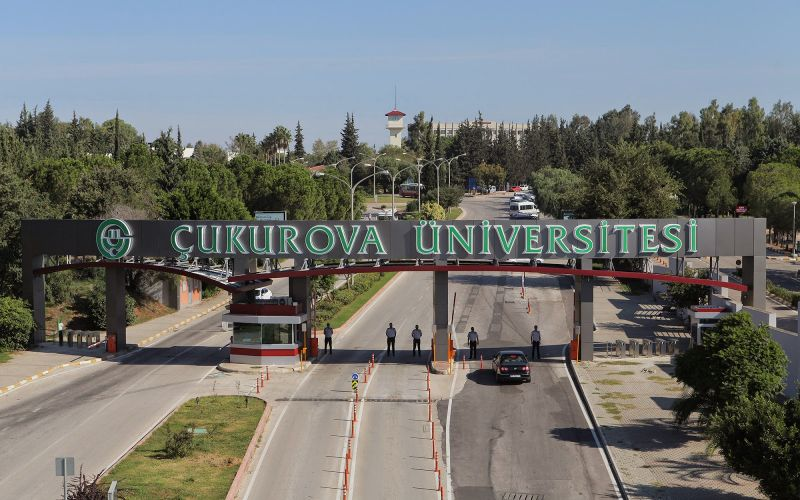
Çukurova Üniversitesi, Mühendislik Fakültesi, Biyomedikal Mühendisliği Bölümü, Balcalı Kampüsü, 01330 Sarıçam/ADANA, Turkey.

Attend in person:

If you want to attend the symposium on-site, please email sympo_adana@confmss.org. The symposium seats are limited. Both contributors and non-contributors who wish to participate in the symposium in person need to apply to the symposium organizers.

VISA:

https://www.mfa.gov.tr/

Visitors who are not exempt from entry visa must obtain their visas or schedule an appointment with the Turkish Consular offices via Pre-Application System for Turkish Sticker Visa (www.visa.gov.tr). The applicants who meet the requirements will be directed by the Pre-Application System for Turkish Sticker Visa to the e-Visa system (www.evisa.gov.tr) In those countries where Türkiye does not have a consular representation can also use online scheduling for appointments with the nearest accredited consular office of Türkiye.

In order to avoid inconveniences that may be caused by delays in processing, it is recommended to apply for visas at least one month in advance before the planned travel.

The visas submitted to foreigners do not guarantee absolute rights of entry to Türkiye.

Visa fees are not refundable in cases where applications are rejected

All applicants are required to have a medical insurance that will be valid during their stay in Türkiye.

The length of stay provided by visa or visa exemption cannot exceed 90 days within each 180 days. The regulation of 90 days of stay within the last 180 days is binding for all foreigners that will travel to Türkiye.

It is not possible for foreigners holding two passports to stay in Türkiye for 90 days each with their two different passports within the last 180 days.

In all types of visa applications, Turkish consular offices may issue visas with a maximum duration of stay of 90 days. The foreigners who wish to stay longer than 90 days in Türkiye, should apply for "Short Term Residence Permit" at the Provincial Directorate of Migration Administration in order to extend their residence.

The residence permit of the foreigners will be cancelled if they stay outside Türkiye for longer than 120 days in total during the last year.

For United Nations (UN) Travel Document (Laissez-Passer) holders who have blue UN travel documents, visa exemption with 90 days length of stay within the preceding 180 days may apply during their official visit to Türkiye if they can certify their official assignment. Red UN Travel Document holders, shall be exempt from entry visa and may stay in Türkiye 90 days within the preceding 180 days regardless of their purpose of visit. General visa provisions shall apply for Blue UN travel document holders subject to regulations specified according to their country of origin.

Visa applications for travels except for touristic or trade purposes (work or study etc.) will need to obtain visa through Turkish Representations in the abroad.

Regardless of the visa regime applied towards the citizens of a country, the travel document holders of that country need to obtain visa from Turkish missions beforehand.

Any applicant under the age of 18 must submit official written approvals from both parents. For those applicants who certify that their parents are officially divorced and prove the parent holding their custody as well as for those with one parent deceased, visas may be issued in accordance with their purpose of visit.

The authorization of processing the residence permit applications submitted by the following persons who enter Türkiye availing visa-free regime and without requirement of obtainment of Student Visas lays with Local Immigration Offices (Provincial Directorates of Migration):
Foreigners who arrive in Türkiye upon invitations by universities under Turkish Higher Education Board to study at the associate, undergraduate, graduate, post-graduate, Ph. D levels pursuant to international student exchange programs, cultural programs as well as under EU Education and Youth Programs.

For foreigners wishing to enter Türkiye via naval ports with touristic purposes, visa-free entry permits may be issued by the local governorates. These permits shall have a maximum 72 hours duration of stay and will be only valid for sightseeing purposes in the vicinity of naval ports where they entered the country. This practice, as it intends to facilitate entry for those visitors subject to visa, does not entitle visitors to visa. Passports of these visitors are not retained by the border authorities; however, visitors are given "Harbor City Entry Permit" which is required to be returned to the authorities upon their exits.

Any piece of data submitted here may be processed and stored in database accessible to the relevant Turkish authorities in accordance with their respective mandates.

Tourist Visa

If an invitation letter is submitted for a Touristic Visa application, it must include the inviting person's TR Identity Number, clear identity, the list of invitees, permanent address, contact number, length and purpose of stay and the affinity with the applicant must be stated in the letter. If the inviting side is an organization or a company, tax registration certificate of the organization will be required. In the invitation letter it is also required for the inviting person/authority to pledge for covering victuals and accommodation expenses and for taking their own responsibility. The applicant is required to have sufficient and/or regular remunerations.